Diesel tanker carrying 2 million gallons capsizes with 17 aboard — 1 killed, but the ship is still floating upside down
WION on Youtube. A tanker carrying roughly 7,000 metric tons of diesel, about 8.2 million liters or more than 2 million gallons, capsized in the Mediterranean off the Spanish island of Ibiza this week, killing one crew member and putting Spain’s pollution response on alert. The Malta-flagged product tanker Med Emre was sailing from Algeciras to Barcelona when it keeled over about 30 nautical miles off Ibiza’s
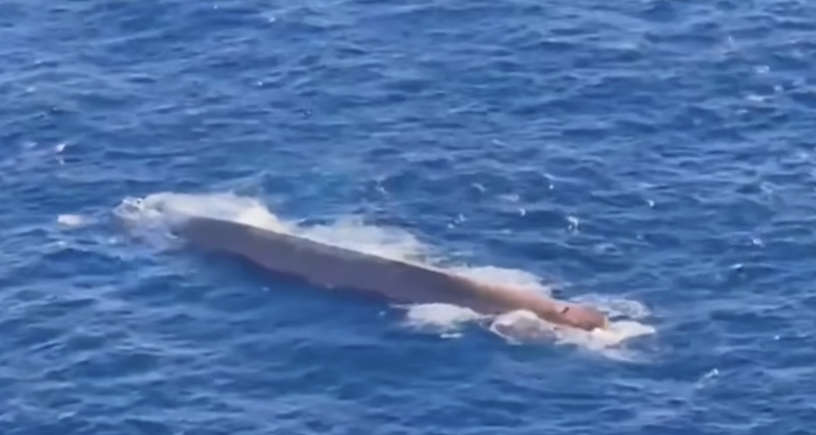
northwestern coast, the Balearic Islands’ interior department said. The vessel took on water and listed heavily before turning over, and the master ordered the crew to abandon ship in poor weather. All 17 crew members were rescued, but one Turkish seafarer later died in hospital. Six others were treated mainly for hypothermia. No official cause has been given.[Manuel Hernández Lafuente/VesselFinder.] The ship did not sink completely, which may have prevented a disaster. “The positive news is that the vessel is not on the seabed but remains semi-submerged at the surface, which allows salvage and containment operations,” said Pablo Garriz, the Balearic Islands’ regional head of emergencies, adding that there was no evidence of a significant spill, though small sheens had been seen. The roughly 120-meter tanker remained upside down and partly underwater the day after the accident, and German reporting noted its double hull offers added protection. Spanish officials have approved a plan by salvage companies to tow the capsized tanker to the port of Cartagena, where the diesel is expected to be pumped out. Spain activated its national maritime pollution contingency plan at level 2, the second-highest, and sent a specialized oil-spill response ship.WION on Youtube. The stakes for the environment are high. The waters around Ibiza are home to sea turtles, dolphins, and the Balearic shearwater, one of Europe’s most threatened seabirds, along with vast meadows of Posidonia seagrass that support marine life. Spain still remembers its worst maritime environmental disaster, the 2002 sinking of the tanker Prestige off Galicia, which spilled tens of thousands of tons of heavy fuel oil and fouled beaches in Spain and France. Diesel is lighter and evaporates faster than heavy fuel oil, but a spill of this size could still damage coastlines and tourism.[DepositPhotos.] The capsizing also adds to a run of fuel transport accidents this month. On land in the U.S., fuel tankers rolled over or exploded in the Florida Keys, Houston, and South Carolina, and a tanker fire killed at least 31 people in Cairo. At sea, the Mediterranean has become riskier for energy shipping, with Ukrainian drones striking a Russian warship and a commercial vessel off Libya. The Med Emre, built in Turkey, entered service only in 2019, so investigators are likely to look closely at weather, cargo loading, and any hull or equipment failure rather than age.[WION on Youtube.] For fuel markets, the loss of one 7,000-ton cargo is small next to Europe’s daily diesel consumption, and prices have been driven more by global supply this month. The bigger question is cost: accidents and conflict in the Mediterranean can push up insurance and freight rates for tankers moving refined fuels between Spanish refineries, North Africa, and the rest of Europe. For American readers, the practical takeaway is that diesel moves through long, fragile supply chains at sea and on the road, and every link, from a product tanker to a delivery truck on a highway ramp, carries risk. The next signals to watch are whether the Med Emre’s tanks stay intact during the tow to Cartagena and what Spanish investigators find about why it rolled over.