Customer repeatedly grabs 19-year-old retail worker who asks him to stop. Then security notices what’s happening
A 19-year-old retail worker in Dublin said a customer repeatedly touched him after recognizing him from TikTok.
Wayne McCarthy (@itsallwayne) explained that he had no problem with viewers approaching him to say hello, but the encounter became uncomfortable when the man continued putting his arm around him despite being asked to stop.
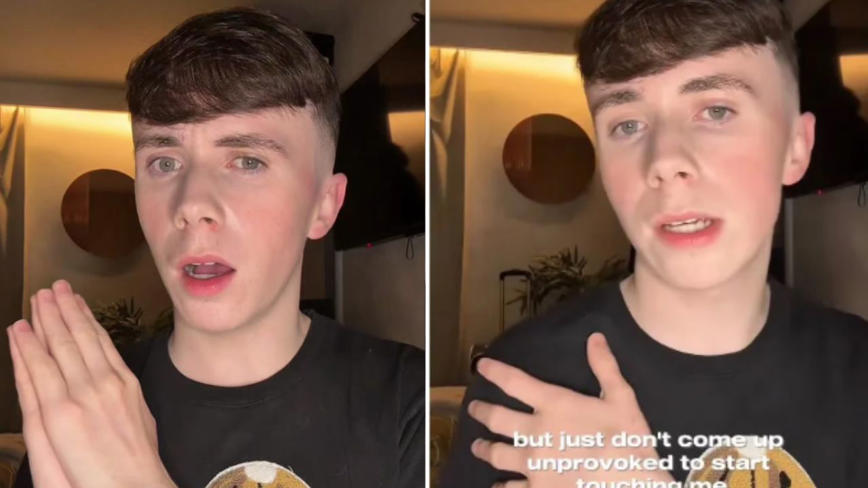
The customer then made a comment about McCarthy’s flushed face.
Recalling his response, the creator said, “And he goes to me, ‘Are you going red because I touched you?'”
McCarthy shared the experience in a TikTok video, explaining that a security guard eventually noticed the interaction and reported it.
McCarthy said the interaction began when a customer approached him with a question. Unable to help, he walked the man over to a colleague who could assist.
During their conversation, the customer recognized McCarthy from TikTok and put his arm around him. McCarthy stepped away, but the man did it again.
McCarthy explained that his face had already become red because of the store’s heat and irritation from perfume.
He responded, “I said, ‘If you watch me on TikTok, you would know my face is always red,'” but the customer continued asking about it.
The situation became more uncomfortable when the customer put his arm around McCarthy for a third time.
McCarthy decided to address the behavior directly and explain how it made him feel.
He recalled telling the customer, “Listen, maybe if you didn’t touch me I wouldn’t be uncomfortable. Can you stop touching me?”
The man reportedly responded that he was only joking and had consumed a few drinks.
A security guard nearby noticed McCarthy repeatedly asking the customer not to touch him and reported the situation, according to the creator.
The store then asked the customer to leave.
McCarthy also made it clear that he did not consider the man a threat, despite being uncomfortable with his behavior.
Addressing the customer in his video, he said, “I have no bad intentions towards you. You were really nice, I didn’t get any bad vibes off you.”
McCarthy’s experience also highlighted how some social media viewers can develop a sense of familiarity with creators they follow.
In media psychology, this is known as a parasocial relationship, a one-sided connection audiences form with public figures and online personalities. Donald Horton and R. Richard Wohl introduced the concept in a 1956 paper, explaining how direct communication from performers can create an illusion of closeness.
McCarthy said he still welcomed viewers who wanted to meet him and ended his message with a clear reminder.
“Just because you know someone from TikTok or you know someone from social media, do not touch me,” he said.